No products in the cart.
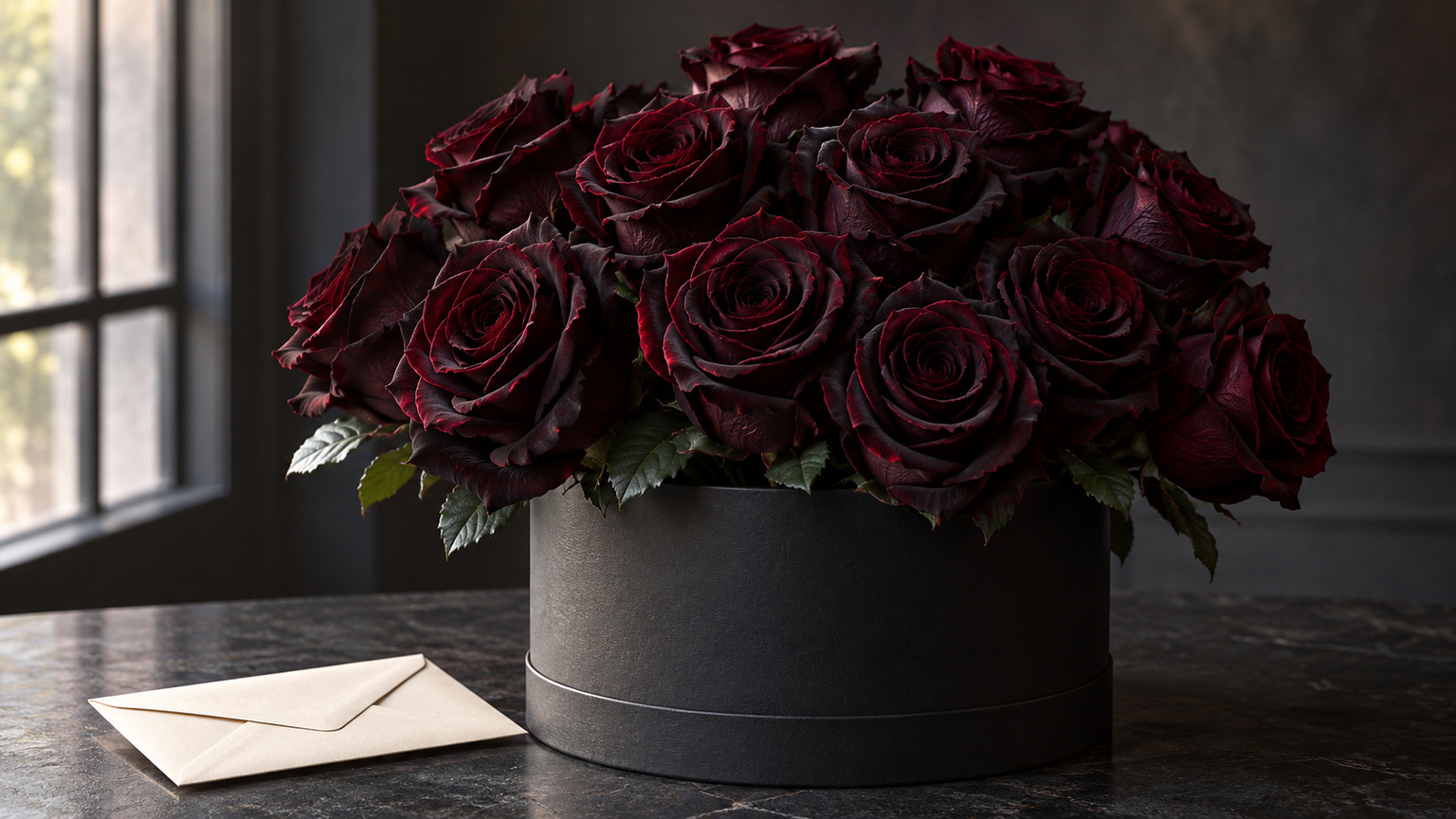
What do black roses mean?
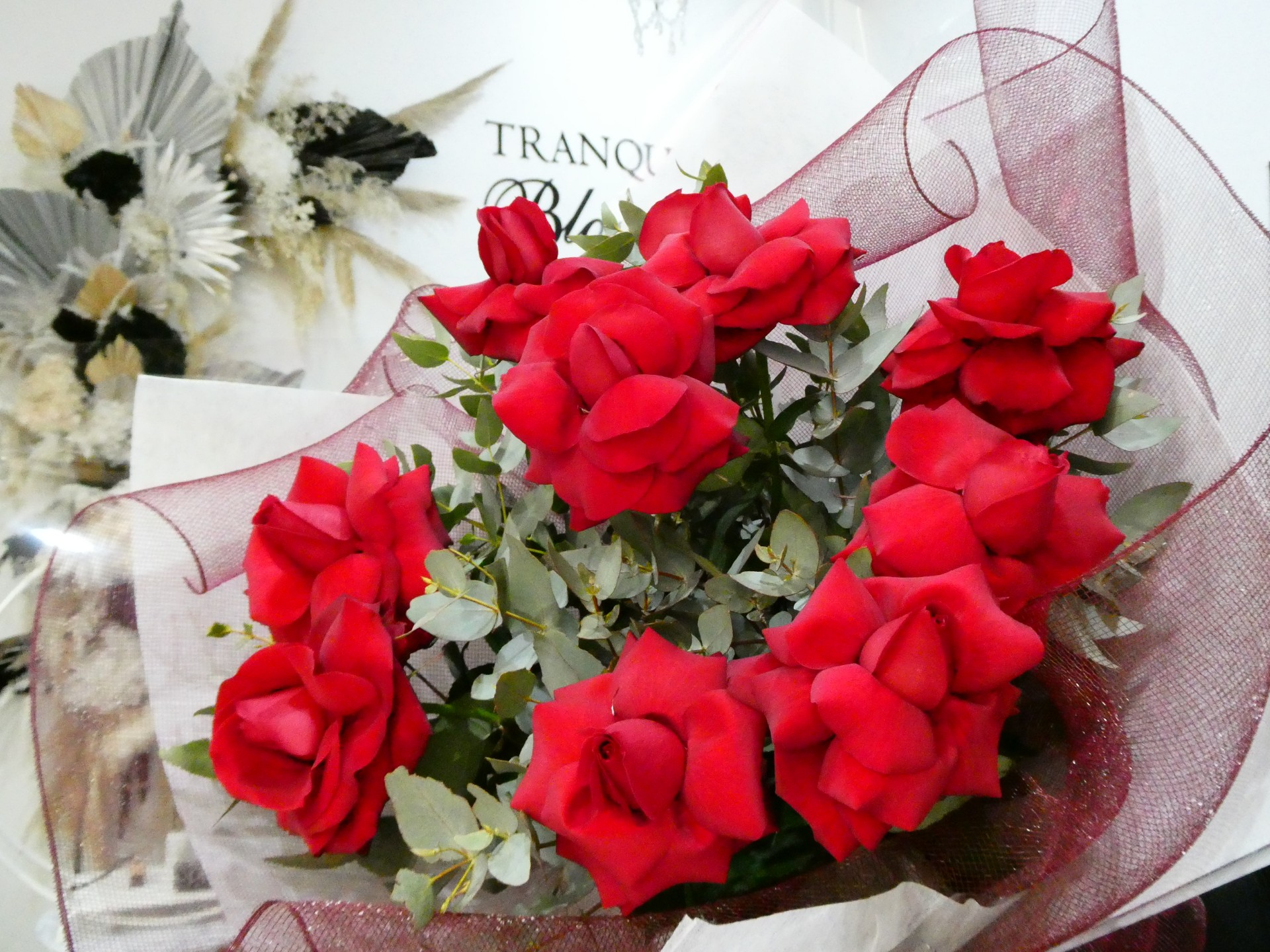
Black roses can suggest change or courage, but the recipient may simply like the dark style. The flower colour, product name and box colour each need to be read separately.

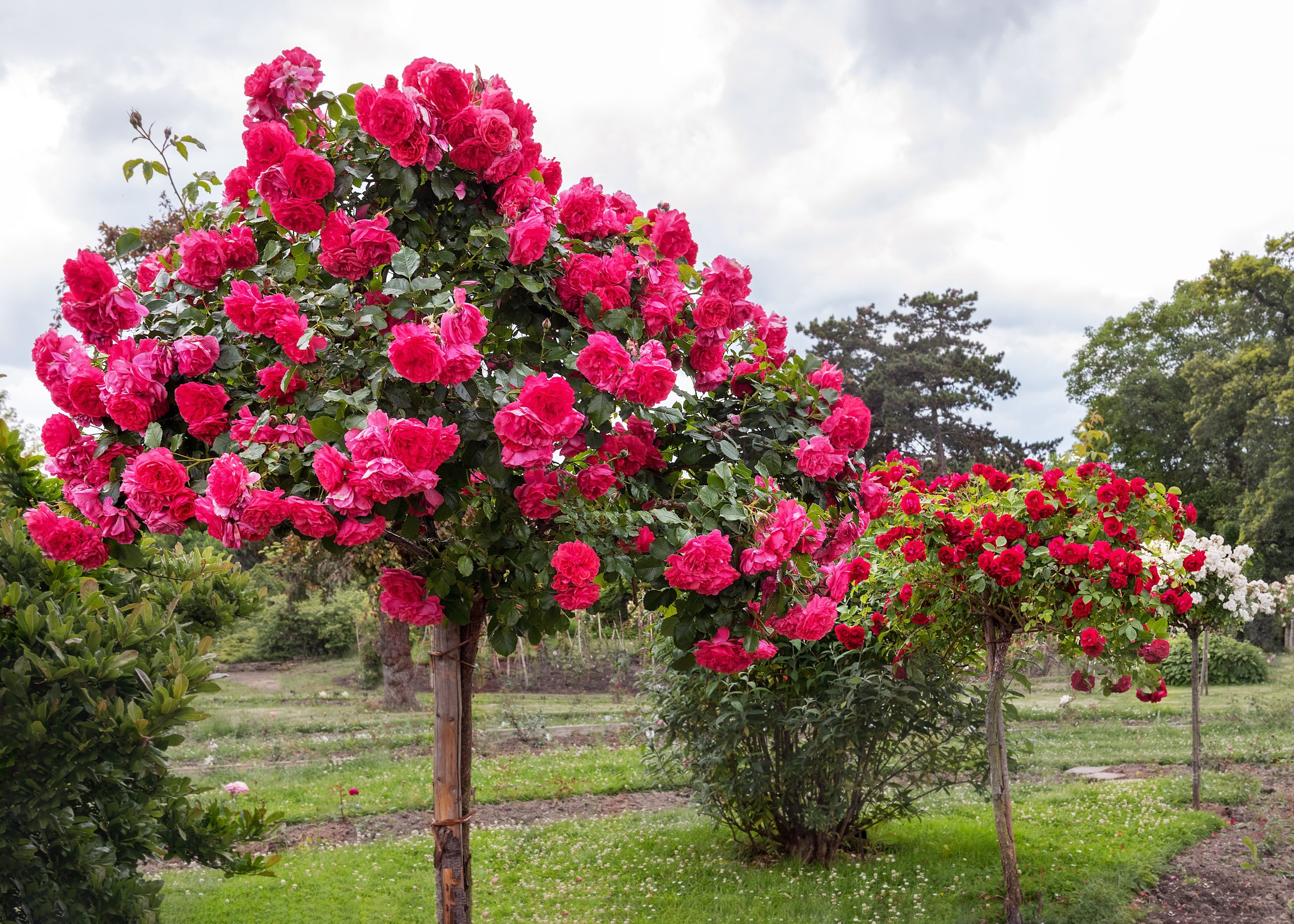
When customers tell us strong floral scents give them headaches, we do not assume flowers are off the table. We assume the bouquet needs to suit the space. A bunch that feels fresh and thoughtful in a large, airy room can feel far too much on a reception desk, in a small apartment, or in a shared office.
That is why the best low-fragrance orders are usually the most deliberate ones. The aim is not to make the flowers bland. It is to make them easy to live with.
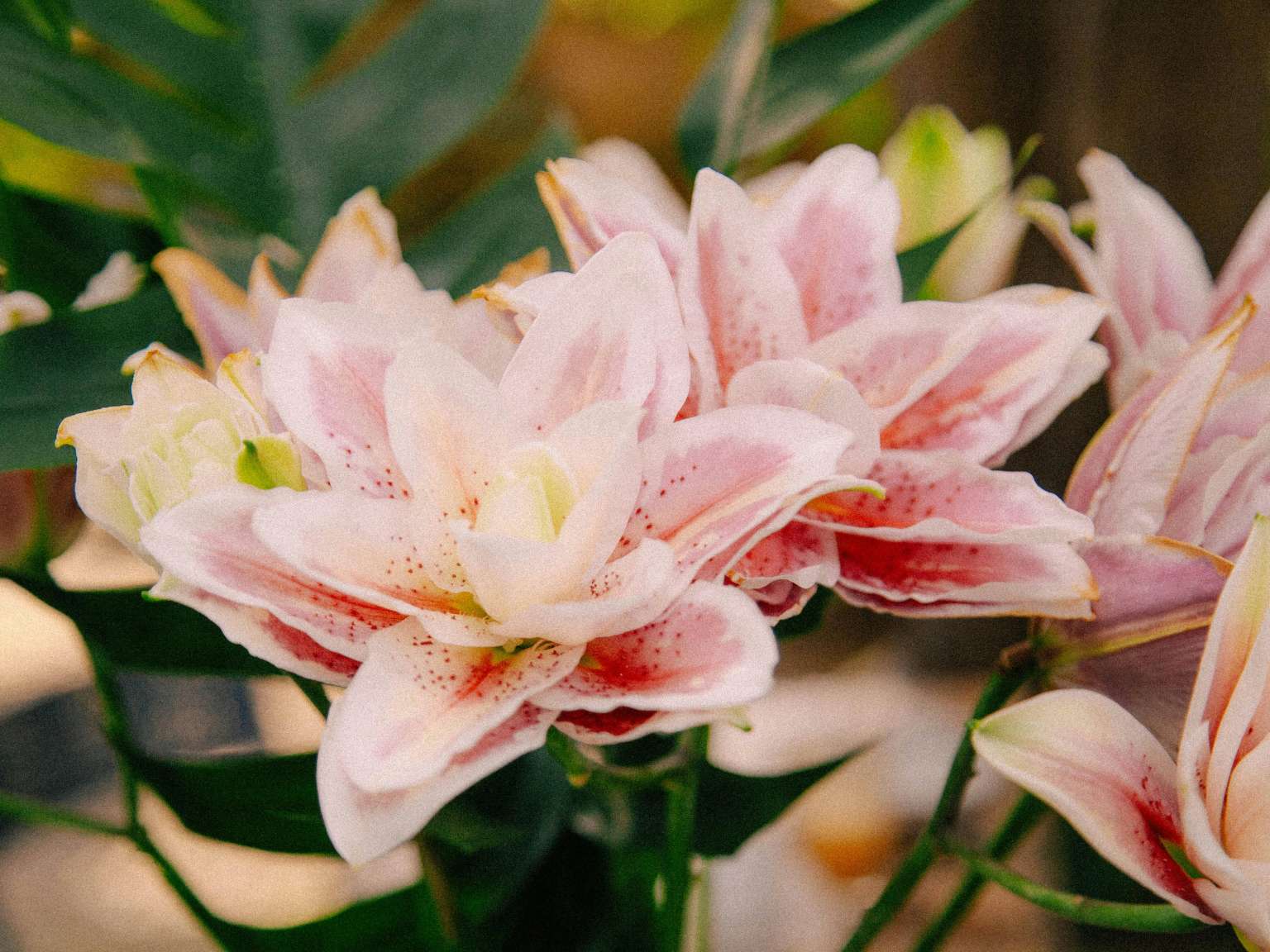
The most useful thing you can put in your order notes is not a long blacklist. It is a short description of how you want the arrangement to feel.
Try:
That gives us room to work with what is looking best that week while still protecting the recipient from a bouquet that feels too heavy or too perfumed.
For scent-sensitive people, we usually lean towards flowers and designs that feel clean, contained and easy to place. In practical terms, that often means:
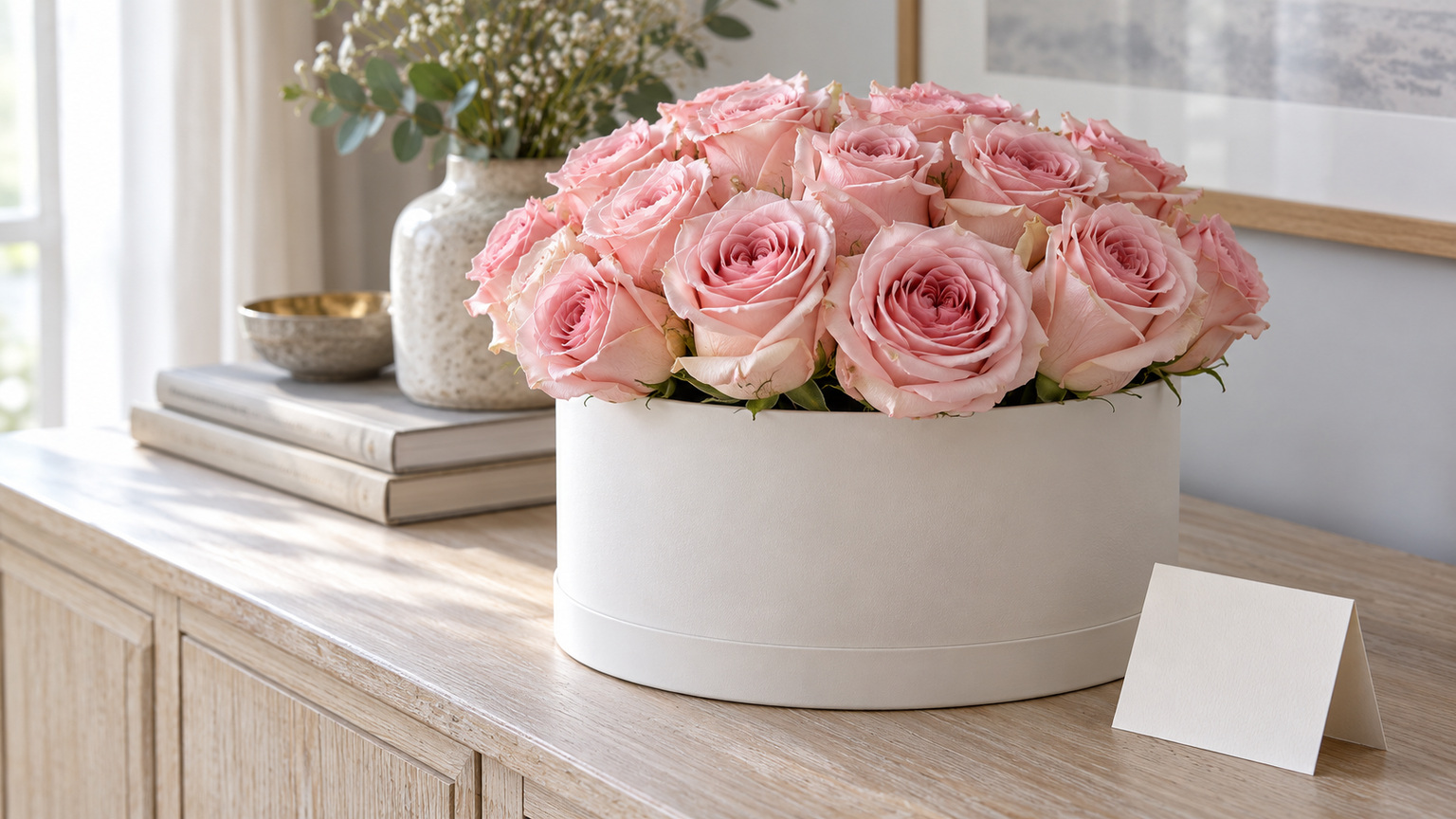
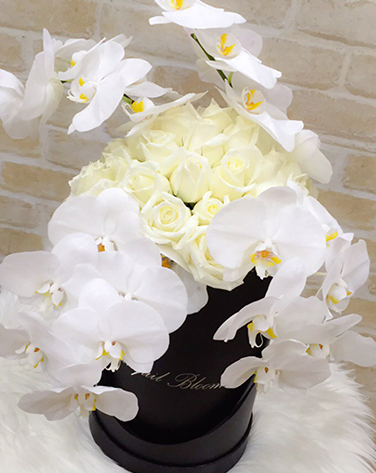
That can include orchids, tulips, hydrangea, lisianthus, gerberas and many modern rose varieties, depending on what is in season and how the flowers are opening that week. Fragrance can vary by cultivar, freshness and room temperature, so “low fragrance” is always a preference to request, not a fixed botanical guarantee.
| Setting | What tends to work well | What to ask for | What to be careful with |
|---|---|---|---|
| Open-plan office | Compact, tidy bouquets with low fragrance | “Office-friendly, low fragrance, not too large” | Anything strongly perfumed or wide enough to dominate a desk |
| Reception desk | Clean shape, stable arrangement, easy to top up with water | “Low fragrance, neat presentation, compact footprint” | Tall or sprawling designs that block sightlines |
| Small apartment or bedroom | Softer, lighter-feeling flowers in a manageable size | “Low fragrance, suitable for a small room” | Heavily perfumed blooms that can feel stronger indoors |
| Hospital or aged care room | Smaller, low-fragrance designs that are easy to manage | “Low fragrance, modest size, please keep it simple” | Oversized bouquets or strongly scented flowers |
| Home with pets or toddlers | Low-fragrance flowers placed well out of reach | “Low fragrance and easy to place safely” | Anything likely to be left on a low table within reach |
This is the part people often get wrong. They assume that if you avoid strong scent, the flowers will feel underwhelming. In reality, colour, texture and shape do a lot of the emotional work.
A bouquet can still feel generous if it has:
For offices, we usually find that a bouquet that reads as polished and calm will be better received than one that tries to make a dramatic entrance.


A lot of people use “allergy” and “strong smell” as if they mean the same thing. They do not.
Hay fever is commonly triggered by airborne pollen from grasses, weeds and trees. By contrast, many showy flowering plants have larger, stickier pollen that is less likely to float around the room in the same way. When people say flowers make them sneeze or feel unwell, it can sometimes be the perfume or fragrance compounds bothering them rather than the pollen itself.
That does not mean every bouquet is fine for every sensitive person. It means the problem is often better solved by ordering for low fragrance and low mess, rather than assuming all flowers are an allergy problem. If someone has significant hay fever, asthma, or a history of strong reactions, it is still sensible to keep things simple and choose flowers with care
If you know the recipient is bothered by fragrance, we would usually be cautious with:
Warmth matters. A bouquet that smells mild in a cool shop can feel noticeably stronger after a few hours in a heated room, a sunny office, or a warm apartment. That is one reason we always treat low-fragrance requests as a design brief, not just a flower list.

Most customers do not want a lesson in flower chemistry. They want to get the order right the first time. The simplest approach is this:
For example:
Office delivery note:
“Low fragrance please. Compact and tidy for a desk or reception area.”
Small home delivery note:
“Low fragrance, suitable for a small room, nothing heavily perfumed.”
If you are unsure about their preferences:
“Please keep it low fragrance and easy to live with.”
That is usually enough to steer the arrangement in the right direction.
Low-fragrance flower choices change through the year. Some weeks we can build around naturally milder options very easily. Other weeks, the best low-fragrance result comes from adjusting the mix, the scale and the opening stage rather than insisting on one exact flower.
That matters in Australia because warmth changes how a bouquet behaves. Fragrance can feel stronger in hot weather, and flowers can open faster in warm interiors. A good florist will account for that when building an arrangement for a scent-sensitive recipient.
If flowers are going into a home with pets or small children, placement matters. Keep arrangements well out of reach, especially in households with curious cats. If a child or pet may have chewed plant material and you are worried, the Poisons Information Centre in Australia can advise on 13 11 26. Healthdirect’s poisoning page is here.
If someone gets headaches from strong scents, do not overthink it. Send flowers that are easier to live with.
A good order is usually:
That keeps the gesture welcome, which is the whole point.
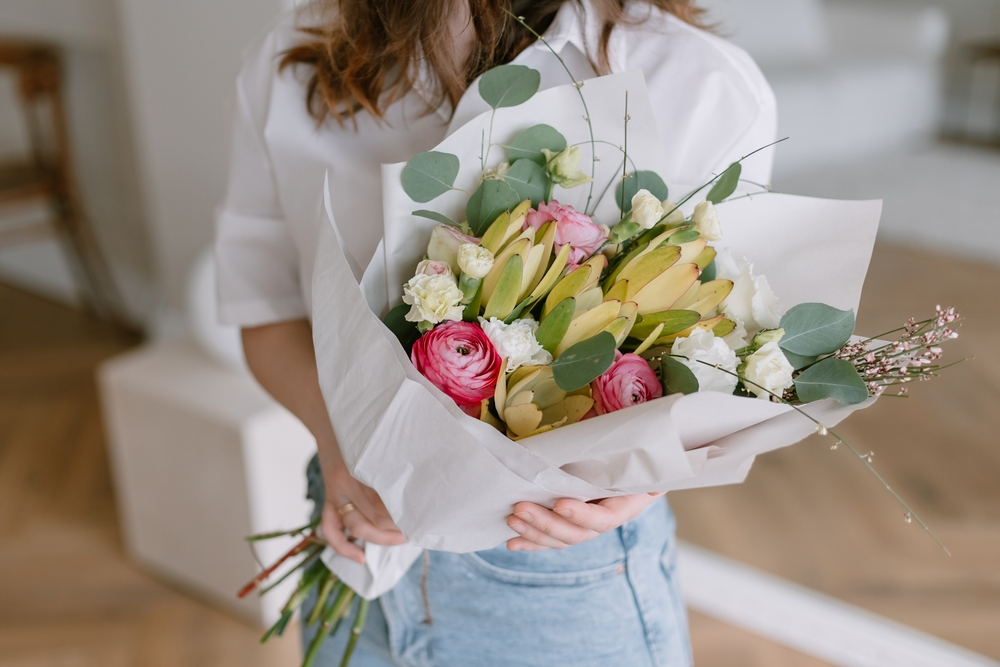
Low-fragrance, compact bouquets are usually the safest choice. Orchids, tulips, hydrangea, lisianthus and many modern roses can work well, depending on the variety and season.
No. A bouquet can still feel generous and beautiful through colour, texture and shape, even when the fragrance is kept light.
Not always. Hay fever is commonly linked to airborne pollen from grasses, weeds and trees, while some people react more to fragrance than to floral pollen itself.
Something simple works best: “Low fragrance please, compact and tidy, suitable for an office” or “Low fragrance, suitable for a small room.
No. Some rose varieties are much more fragrant than others. If scent matters, it is better to request low fragrance than assume all roses will smell the same.
Warm rooms and faster opening can make fragrance feel stronger over time.
Usually, yes. They are easier to live with in shared spaces and less likely to distract colleagues or overwhelm a small desk area.
Move the bouquet out of reach and get advice promptly if you are concerned. In Australia, call the Poisons Information Centre on 13 11 26.